
Steps towards an egalitarian society?

The jargons impact investing, socially responsible investing (SRI) and environmental social governance (ESG) may sound synonymous. To one’s surprise there is an extremely thin line between them, the root may be the same of creating a positive social and environmental impact but they branch out as three different types of investing. These words have attracted traction since the last decade or so. Booming consumer culture around the world not only exposed different parts of the world with consumerism but led to resultants such as global warming, climate change, accumulation of e-waste, pollution, violation of human rights, health and safety concerns at work, inequality between haves and haves not, corruption, governance issues, digital divide, inefficiency ofseamless health care services. Concepts of ethics and morality have become a revelation by individuals and the same is expected by businesses thus highlighting responsible investing such as impact investing, SRI and ESG. Fostered by the plight of the environment, disrupted ecosystems, animal extinctions and increasing disparity in society. So, what differentiates impact investing, SRI and ESG? How do investors and businesses view them? Are they really impactful? Impact investing, SRI and ESG advocates the intent to establish both positive social outcomes and financial outcomes. The predecessor to the millennials usually were proponents of profits maximization and generating maximum yields based on their invested capital. Consumerism was on its peaks, only a handful of individuals were environmentally conscious and familiarized with its ill effects (landfills, incineration, pollution, climate change, global warming, pandemics, natural disasters) taking a toll on the environmental and society as a whole. Environmental activists and supporters commenced spreading awareness, holding rallies and challenging corporate businesses and governments. Eventually environmental studies carved a part for itself in school and university curriculums. Gradually successors such as millennials based on their academic backing and experiences (Gen Y) brought to light the idea of responsible investing. They either choose to invest in companies that are environmentally and socially friendly and transparent, or provide funds to social entrepreneurs (having an hands on or hands off approach) or merely invest in companies that reflect their values, beliefs and personality. Millennials state that their ultimate reason for espousing responsible investing is reflecting their beliefs, values, personality, social, political and environmental views. Millennials and the budding Gen Z are extremely thoughtfultowards protecting the environment for the future generations, having being exposed to and cognizant of the dire impacts of corporate businesses on the environment and society. For instance planned obsolescence a strategy employed by major tech giant firms to upsurge demand for their products by creating products that carry a short life span. Thus leading to massive amounts of e-waste being generated, pollution due to incineration, pollution of nearby waterways and rising number of fatal cases such as cancer or asthma amongst people living nearby such sites or who deal with the waste. The collapse of the Rana Plaza garment factory (in Bangladesh) took lives of numerous workers producing clothes for brands such as H&M, bringing in headlines of poor working condition and dearth of health and safety provision. The infamous BP oil spill in the gulf of Mexico (2010)/ Exxon Valdez spill (1989) created a precarious situation for the marine life. The Volkswagen emissions scandal deceived public on emission testing. Consumer demands for data protection online/social networking websites propelled the introduction of GDRA regulation in EU, enforcing other countries to create and adopt similar frameworks and regulations. Investments in small social enterprises and backing social entrepreneurs/innovators is in short, the aim of impact investing. Impact creation is the first and foremost criteria for investment while profit maximization is weighted second.However, the balance between the two differs, grounded oninvestment approach of the investor. Impact investing can take the form of funding projects such as affordable housing, clean energy/ clean tech, education provision, affordable health care services and microfinance. It is relatively a risky investment congruent to investing in a startup as financial returns are uncertain and also the impact creation may not sustain due to scalability issues. Impact investing is at a nascent stage and only a handful of investors have the inherent ability, passion and enthusiasm to get on board.Usually enormous VC funds or investment funds don’t mind dipping their hands in tricky waters, and in fact they and NGOs together are majorly supporting social enterprises. In agreement that any manifestation of responsible investing will steadily proliferate in the comes years due to changing societal mindsets. Valuing a corporate business lacks complexity due to abundance of financial information. However impact investing just like a startup encounters scarcity of valuation metrics. As an investor ascertaining multiple facts such the actual impact created, relevant audience being targeted, the number of people impacted, effective and efficient business model and frameworks for valuation purposes can be challenging. Besides some mind churn and research is essential to determine that the problem targeted is practical and so is the solution. One needs to have clear picture and approach in mind before becoming an impact investor. What is their purpose in life? What do they want to achieve/ outcome? What change would they like to create in the world? Hence identify a small social enterprise which shares concurrent beliefs, meet with the founders and understand their perspective, their mission and vision, their ability to scale up and create as much impact possible. Akin to startups others risks involve scalability, liquidity issues and exits avenues. Impact investors can additionally form club deals with VC and PE investors to continue their support to the enterprises as their backed social enterprises scale. ESG essentially refers to an array of environmental, social, governance factors a commercial corporate firm should possess and abide by to attract investments from the socially/environmentally conscious investors. To delve deeperlet’s have a look at the factors one considers before investing in a company: Environmental factors: • Harmful Emissions from factories • Pollution • Biodiversity • Waste management • Cradle to Grave • Circular economy • Animal Welfare • Energy use (carbon neutral organization) Social factors: • Health and Safety of employees and workers • Child Labour • Human Rights • Employee rights • Supplier relations • Customer relations • Data protection and privacy • Gender diversity Governance: • Transparency • Auditing • Shareholder Rights • Conflicts of interest Firms that integrate, target and administer ESG factors/guidelines will certainly reap the benefits with regards to yield generation, profit maximization and social change.Incorporating a mix of the ESG expectations create manifold benefits such as minimalize any regulatory or legal difficulties, increase employee motivation, curtail costs significantly and accelerate topline. An argument or alternative perspective arises, ESG can be deliberated as strategic intent for both the parties. The company that complies to ESG standards can undoubtedly attract a pool of new age investors (millennials, GenZ) as the company enhances its reputation and is celebrated in the limelight. Accumulating funds to grow and prosper producing phenomenal financial outcomes (for themselves and the investors) and simultaneously social change. SRI (Socially responsible investing) is embraced by investors who wish to support a company that conforms to their beliefs and personal, ethical or religious values post conducting a negative and positive screening of industries and companies. For instance, one investor may take an oath not to invest and collaborate with companies producing and selling alcohol, cigarettes or weapons. It is indeed an interesting outlook to investing as the investor feels a sense of
Accumulate wealth: the long-term way!

Long-term business success, long-term business planning, long-term goal setting, long-term vision, long-term sales/ profits, long-term outcomes, planning for one’s child higher education, purchasing a family insurance. These terms, phrases and actions are inculcated in our daily lives. They sound familiar and we resonate with these phrases as we hear and read about them primarily in the business context or financial planning. From business leaders to students at business school are encouraged to implement a long-term approach to business success and viability. Meanwhile individuals merely rely on savings and short-term investments without conducting research resulting in suboptimal returns sans any suitable approach to create wealth. They are sceptical to take risks and fail to adopt a long-term approach to investments which essentially will create spectacular returns. Advocates and proponents of long-term investing like Warren Buffet, Benjamin Graham and Philip Fisher propagated the idea of long-term investing (in equity markets) underlining the concept of compounding of assets thus accumulating unexpected wealth. Long term investing utilizes the fundamental approach to investing tapering risks and losses . However, this approach requires immense reading and examination of the investee company than the scrutiny of the stock market or its trends. Psychology plays a pivotal role in long term investments, it can either make or break the game. One needs to maintain a logical and practical approach and keep emotions aside. The investor should consider the investment as business investment rather than stock market investment. Patience is truly a virtue for the long-term investor. So how should one explore and follow long-term investing as an investment style? Individuals are baffled with the dilemma that they require expertise for long-term investing. While one can employ an analyst who is competent in the field or a mutual fund/ investment fund that abide by the concept of long-term investing. Getting acquainted with a few concepts of long-term investing will do no harm and in fact empower individuals to gauge their investments and not merely rely on the decision of mutual funds/investment funds. Usually investing is seen from two sides of the lens. A top-down approach or bottom up approach. The former approach implies that investors, investment managers and analysts scrutinize the economy by spotting trends resulting from secular growth, analysing GDP growth and sectors that have favourable potential or huge growth and later identify companies that are financially stable and worthwhile for investment. While the latter approach is the opposite where companies are enumerated first and analysed upwards i.e. industry/ sector/ economy. Let’s consider the bottom up approach. Companies are usually selected based on a thorough analysis, examining both the quantitative and qualitative factors of the business. Moreover, it is vital to validate the potential growth rate of the industry remaining consistent in the next few years. Implying the possibility that the business growth will too accelerate around that figure. Quantitative aspects highlight analysing balance sheets, profit and loss statements, cashflow statements and a couple of financial ratios to deem a company’s financial strength. Consistent growth and performance across the last 7-10 years will paint an accurate picture in the investors mind towards investing in a company. A holistic financial analysis of the company’s financial position is of utmost importance. If it is performing well than only it will lead to accelerating quality of earning (EPS). A company that is generating free cashflows, is operating on zero debt, producing above average EBITDA, ROE, ROCE and PAT ratios can become a part of the stellar list of companies. In addition gauging if the business possess an asset light model (less assets required by the company) is essential as it results in tapered expenses and augmenting profits. The qualitative aspects principally refer to the strength of the business internally and externally: What is the business model and is it durable, scalable, feasible? What are the products and services offered by the company? How are they sold? ‘What is the USP of the products of services? What is the market size and size of opportunity? Is there brand loyalty and customer loyalty? Can they predict disruption and adopt first movers’ advantage? Are they ready to react to disruption? Does it possess the capabilities to organically grow? What are its existing and potential business strategies to grow? Is the quality of the management fair and just? Are they following corporate governance? These are generic questions one may confer to while deliberating on the business they would like to invest. Not to miss, considering the longevity of a business is key, its persistence to survive, remain agile and nimble respond to disruptions. A business that can survive for decades or centuries has the possibility to generate phenomenal and spectacular returns if managed by a highly skilled, competent and committed management. Consider the legacy brands like Coca Cola, Mc Donald’s, HP, Exxon mobile, Pfizer and the lists is never-ending. PS: Extra factors to focus on are listed below: An amalgamation of all these factors together constructs a holistic picture of the business and its suitability for investment. Information on these factors can be accessed from the company websites, annual reports, quarterly reports, brokerage reports, insights collected from your network, analysts or primary research carried out by connecting with suppliers, customers, competitors and other investors. Prior to purchasing shares or stocks in a company one has to ensure if they are purchasing an overvalued or undervalued stock/ shares. So, what does this mean? Overvalued hints at the fact that you are paying more than what the company is worth and undervalued is you are paying less compared to the value of the company. According to the supreme Benjamin Graham, a value investor purchases shares or stock that is undervalued and has the ability to generate optimal returns ( via capital appreciation as the EPS of the company surges its market capitalization increases and price may equal to value) i.e. in simple words buy cheap and sell high while maintaining a long-term approach. It is all the more necessary to always calculate a margin of safety
The land of opulence and a memento of care
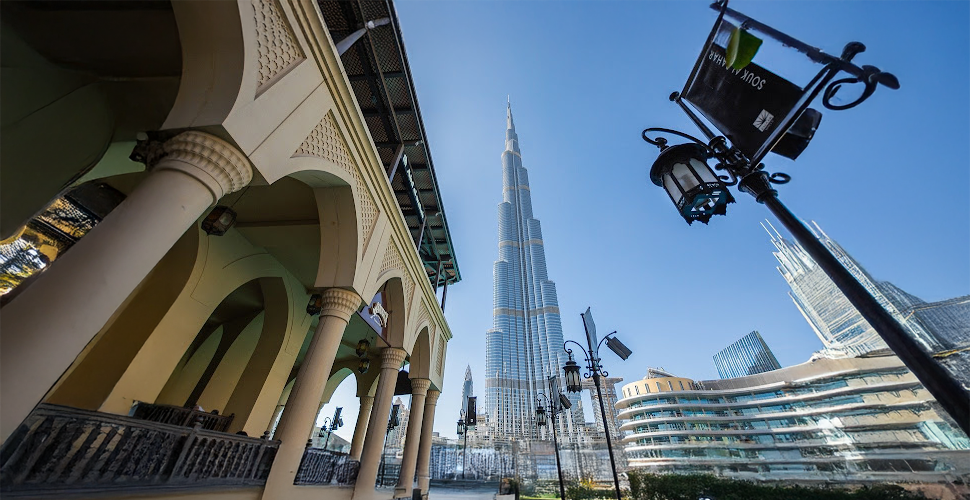
What comes to mind when we think of Dubai mall? Well, I guess we all agree: grandeur luxury at its best, majestic, dream like or even fairy tale. Well when one enters the Dubai mall especially the New Fashion Avenue one is taken aback by the extreme radiance of opulence, the sweet scent of extravagance just like tasting a gourmet dessert with a cherry on the top. One is exposed to a plethora of high-end luxury brands that exhibit a lifestyle that is unimaginable or only possible in a utopian land. As they glide through the pathway it evokes a strong sensation of gliding through a garden of exquisite flowers. One is blinded by the dazzling lights, the shimmer of the exotic bags, sandals, ornaments, apparels and the exorbitant surrounding. They can definitely express the feeling like embodying Alice, from Alice in Wonderland with a candy stick in their hands. As one floats in the air they are exposed to an array of brands specifically the quintessential Gucci, Prada, Channel and so on. Just having a glance at their collections feels extremely enchanting and magical. One will be amazed and charmed by the symmetrical and asymmetrical modern contemporary architecture of the Dubai Mall especially the new fashion avenue area. The ceilings range from hanging butterflies to hanging angels and frostings creating a surreal image of heaven in one’s mind. They evoke a feeling of joy, exhilaration and calmness. Moreover, there is a ceiling that runs in waves with fairy lights all round it creating yet another site not to miss. These phenomenal views add a modern and futuristic touch like we are living in 2040. This visit to the mall was all the more special as my friend and me were on a mission to purchase a gift for her grandmother. We were searching for a present that was glamourous and a piece of class. Walking our way to the old fashion avenue we realized we were surrounded by a spectrum of brands ranging from Moonson to CK, Ted Baker to Maje, Guess to H&M. Well this made our endeavor to purchase a superb gift all the more tedious. As we strolled around shops having a glance at each shop and its collections, we believed we were going to utterly fail in purchasing the gift. However as we looked up and prayed to God for a direction, we witnessed an immensely captivating shop surrounded by bling all around. We jostled our way to the escalator in this colossal mall with frantic shoppers. As we headed we gauged a gigantic shop sparkling intensely that it could blind the eyes. As we walked towards it we saw the brand name embossed in exquisite silver and rectangular piping And Ah there it was ‘Swarovski’ the illustrious Austrian manufacturer of the delicate, glittering and sparkling crystals. We firmly decided to purchase a delicate, intricate and classy present for my grandmother. As we entered the store we were mesmerized by the refulgence and twinkle in the store. We were extremely delighted to walk across the fairy like store that inhabited an eclectic mix of pendants, charms, earrings, rings and home décor items. We were instantly attracted to a set of pearl and Swarovski pendant and earrings for my friend’s grandmother. Finally, the Eureka moment. Oh my God it just looked divine like it was sent down from heaven. So, what was so impressive about this tiny set? Well the pearl looked absolutely gorgeous and heavenly. It was smooth to touch and an ornament that would seamlessly glide on the neck of the wearer like the silky-smooth hair which are difficult to tie in a knot. Well you all must be wondering about the Swarovski crystal. Well that is just like the icing on the top and I seriously mean it. The pearl is topped up with a shimmery transparent colour crystal that radiates the colours of the rainbow when looked at from different angles. The pendant was in a beautiful and delicate silver chain intertwined intricately into one another. The earrings were an absolute complement to the pendant with the same design replicated to them. Well if I think deeper the pearl and the Swarovski crystal may perhaps symbolize the strong family bonds which can never lose connection. All in all, Dubai mall is really a land of opulence and anybody can find their memento of care there. Enjoying and sharing beautiful memories and presents that would always remain with them for the rest of their life. Anybody will feel a sense of tranquility when they visit the Dubai mall. Indeed, it is a marvelous experience just like a scene from the movie ‘confessions of a shopaholic’. (Disclaimer: The opinions expressed within this article are personal opinions of the author. The facts and opinions appearing in the article are views of the author in general and the author does not hold any legal responsibility or liability for the same.)
Deep Tech: Fast Forward, Pause or Rewind?

Technology can be envisaged from the two sides of the coin either it is here to create opportunities or challenges. The advent of the changing business ecosystem amplified by technology, adoption of new age business models, changing structure of the equity markets, new IPO launch’s and significant investments by private equity firms in innovation, indicates that our world is in fast forward mode. Is it for the best or worse? Two schools of thought have erupted as professionals and academia around the world have their strong opinions on the role of deep technology and its impact on mankind and society as a whole. While proponents celebrate this revolution (Industrial revolution 4.0), some believe it is too early to come to conclusions, while some fear the implications of these rising technologies. Before moving on, it is vital to pause and analyze/ evaluate an important understanding or belief. It is usually assumed that startups such as platform businesses, aggregator businesses like B&B apps, transportation apps, food delivery apps and so on, are revolutionary in nature, however they are not. No doubt they have disrupted industries and created new ones. However, the actual innovators and groundbreaking actors are deep tech firms that intend to innovate pathbreaking new technologies to solve social or environmental problems. In fact platform or aggregator businesses too depend on deep tech in the form of AI/ML to operate. Sometimes these businesses are deemed and dubbed as shallow businesses. Hence the actual backbone, pillar and pioneer is deep techcreating a transformational change in the world. Advances in deep technology be it AI, ML, 3-D printing, quantum computing, blockchain, and IoT to name a few, have the inherent ability to transform the world 360 degree. Onecan imagine self-driving cars, flying cars in the sky or individuals travelling in the hyperloop reaching their destinations in a period of 3-4 hours from one part of the world to another. Need help with chores? Robots would be there for our rescue, employed as assistants completing the household chores including cooking and serving their master, and possessing the abilities to reflect and feel emotions of their master. Teleportation services that we have only reckoned with movies may perhaps come true or the concept of holograms come to life revolutionizing the concept of business meetings or social events. PS: Where one can be virtually present but not via a laptop, smartphone or tablet but a 3-D version of ourselves. Sounds incredible right? Not to miss the glorious developments in science, biotech and biochemistry targeted towards increasing the life expectancy of individuals to an unbelievable number, via reinventing and regenerating individual’s cells and organs. Planning a vacation? Well if we fast forward into the future we would be heading for space excursions visiting different planets, pampering ourselves and being pampered in spaceships.Buying real estate? Consider purchasing land on any other planet than earth. All these activities sound mindboggling however there is a possibility that they may be implemented and executed in reality in the future decades. Some academia or professionals may perceive technological developments from the lens of a cynic, albeit some are awed by its accomplishments and its potential to turn the tables. Skeptics argue laying emphasis on the massive and unimaginable unemployment rate skyrocketing as robots replace humans in manual jobs and service related jobs. No doubt it is foreseen that the service industry will be hit hard by technological developments. It is evidently possible that in order to reduce human interaction due to the spread of Covid19 robots may replace individuals at a quicker paceunless the virus is curbed. Cynics foresee and highlight the lack of empathy and emotions that would take place during interactions between robots and humans. While proponents of technology stress on the creation of completely new industries and new jobs that would keep the economic cycle spinning. As far as human emotions are concerned, robots like Sophia are being constructed to incorporate emotional intelligence to emanate the humbleness of human interaction, while keeping them alive. In foresight it is plausible that not only blue-collar jobs are threated but also white-collar jobs are at risk of being replaced by robots, automation and AI/ML. As they have the innate capabilities of conducting similar activities at a much lower cost and in a seamless and efficient manner. Furthermorewhite collar jobs such as accountants, lawyers, surgeons, bankers, insurance writers and so forth are likely to become unemployed in the future. Hence it is plausible that the definition of job and work would be turned 360 degrees. AL/ML are ingrained with knowledge to perform human tasks from prediction to analysis and decision making be it in the field of business decision making to diagnosis and treatment decision making in health care or tracking consumer behaviour for personalized marketing. However it is argued that ultimately humans have the last resort to decide which suggestion to implement as AL/ML merely provide any array of options to choose from. After all its humans who are developing and training it and only humans can operate it to complete tasks. However in hindsight, the increasing power of deep technology and the accelerating rate of their learning capacity, it may be possible that they eventually outcompete humans. Meanwhile parents are alarmed about their children’s future and ability to survive and thrive in the emerging tech ecosystem. Well it is evident that education systems worldwide are gradually taking steps to adapt to the changing ecosystem. Incorporating and focusing on subjects like fostering computational thinking, design thinking, critical thinking, collaboration, designing software and applications, digital problem solving, interface design, data analysis, machine learning, networking, robotics and cybersecurity.Concurrently students need to be enlightened about keeping in mind ethics and the impact on stakeholders of their innovations in the future. It is argued that in the future individuals will not be employable for a particular specialized job, but for multiple jobs by acquiring digital knowledge to thrive in the digital field. Persistent efforts will be required to reskill oneself to remain on the same page as the world. On one hand skeptics are petrified and perturbed by the increasing digital divide and inequality that would be fostered by technology. On the contrary, proponents strongly believe that technology will present and innovative solutions to reduce this divide. Reskilling youth via reskilling programs to stay in touch with new advancements and remain employable regardless of the changing dynamics. However, there is an extreme dearth of such programs or curriculums worldwide which need to be propagated and advocated. Stakeholders around the world such as the government, NGO’s and corporates can propel the process of initiating reskilling programs for the underprivileged children and youth. Hence creating a brighter for future for them and supporting them to stand up and attain self-sufficiency in the coming decades. Several industries have adapted and accepted deep technology such as logistics, transportation, healthcare, pharmaceutical, banking manufacturing, law and order and so on. Smart cities and homes are designed to provide convenience to consumers however unintended consequences need to be taken into consideration as well eg: technical glitches that
Deep Tech: a profound treasure and future reality
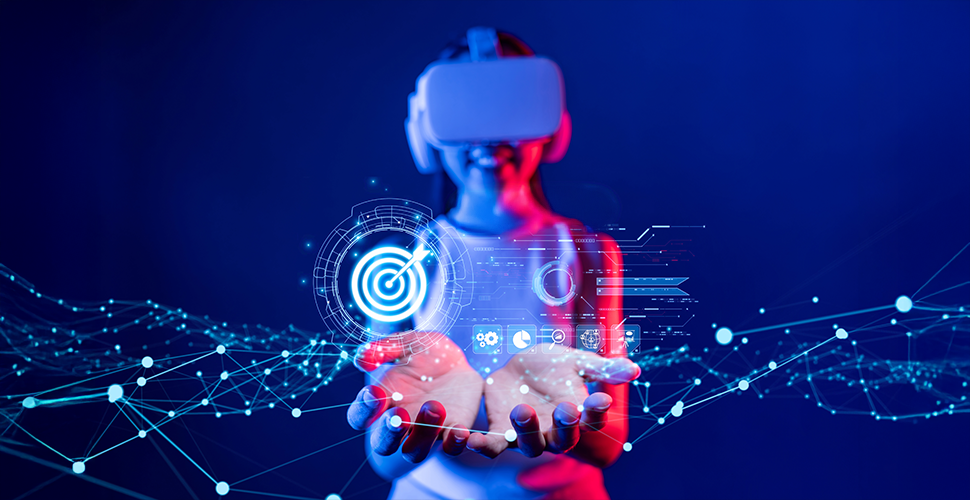
Technology has permeated radical innovation and disruption via establishment of the new business landscape worldwide, revealing precious gems and jewels from its treasure. From acquainting us to new age business models such as platform/network led businesses, sharing economy, on demand economy and gig economy. To revolutionizing the tech industry and augmenting the employment of deep technologies such as artificial intelligence (AI), machine learning (ML), robotics, Internet of Things (IoT), 3-D printing, quantum computing, blockchain, nanotechnology and more in a gamut of industries. Deep tech is incorporated in planning, development and creation of smart cities, is pioneering in designing convenience for the new age consumers, inventing novel treatments and medication for fatal diseases or accelerating productivity and efficiency in different business departments and factories. Deep tech has carved a niche for itself as an investment vehicle and is gradually fascinating investors and funds as they discover its profound potential in the future. What is exactly deep tech? Its’s potential uses and subsequent impact on society? What challenges do they face? Deep technology startups endeavor to encapsulate distinct technologies to corroborate and ascertain solutions to problems prevalent in society such as social and environmental. Moreover, the concurrent utilization of science, engineering and design to solve a problem sparks unconventional innovations, creating manifold impact. Scientists and inventors constantly circulate within the cycle of design, build, test and learn until they meet their intended aim and goals. Since a few decades the application of technology has created abundance of information and magnified powerful computing power available at low cost, enhancing the ability of deep tech startups to bring their imagination into reality. Creating quick, affordable and meticulous prototypes harnessing the power of 3-D printing (or even augmented reality (AR) and virtual reality (VR)) is a blessing for today’s deep tech startup as they can maintain economical cost structure during R&D stage. AI and ML possess the inherent ability to accumulate and acquire massive amounts of data based on testing. Thus, guiding and assisting scientists and designers in the decision-making process whether iterations are required at that moment. Deep tech startups have a foresight, a bird’s eye view, a vision, envisaging the future, what would be humanity’s need or challenges that are necessary to be mitigated in the coming decades. They have innate passion and zeal to challenge the reality, inventing a solution that doesn’t exist, creating first mover’s advantage and ultimately changing reality. However, everything is not hunky dory for deep tech startups as they face major challenges in their journey towards success and commercialization. Unfortunately, there has been dearth of support from stakeholders and very low prospects to scale up. Essentially due to high risk element involved in lucrative commercial success of the product/ service as deep tech firms function with long timelines until they reach a scale, thus leading to skeptical investors. Investors are involved in deep scrutiny of businesses as well as waiver off businesses that are extremely intricate and complicated to understand such as niche area of deep technologies. They contemplate and function on defined investment yardsticks and parameters which unfortunately deep tech firms are unable to meet and justify. However, they are oblivious to the spectacular returns they can earn if they invest in such businesses by instilling a patient attitude and reinventing their investment strategies. Additional challenges deep tech startups encounter includes finding themselves lost in the maze of science and its intricacies, which tends to limit their approach to challenging them. Predominantly the deep tech ecosystem can expand with the overall support of all stakeholders such as governments, academia, investor community, businesses. They are the encouraging forces and motivators for deep tech startups to embrace opportunities to scale up and bring a change to the world. Just like planets revolve around the sun, deep technology constantly revolves around us 24/7. Devices such as Siri, Alexa or google home are like genies who command our wishes via voice commands. They are the virtual remote control, controlling the lights, air conditioner, curtains and devices such as the television, delivering information as questions are raised: what is today’s news, playing our favorite playlists and relaxing music in the evening till we fall asleep. They integrate AI/MLto track human behaviour delivering a hassle free and personalized experience, while also building a powerhouse of data for themselves. AI and ML seize the power to generate predictions and analysis, lending a hand in decision making to radicalize: · Efficient supply chain management · Logistics · Marketing spends and CRM · Risk management · Banking · Trading · Portfolio allocation · Preventing frauds · Medical and early diagnostics · Drug discovery · Predicting natural disasters/ pandemics/epidemics. AI and ML have the sovereign power in voice and facial recognition delivering access to voice google searches and payments via facial recognition. AI/ML are transforming and adding new fuel to the transport industry by the launch of self driving cars, trucks and buses- ‘the future transporters’. In the e-commerce industry these algorithms track human/consumer behaviour to cross sell products and entice customers via tailored advertisements to purchase their suggested products. Robotics has surpassed human capabilities to perform mundane manual jobs. They have already radicalized the supply chain management of businesses making them substantially efficient and productive. Robots operate at an accelerated rate whilst maintaining precision leading to increased phenomenal output and tapering costs for the business. Moreover, they are flexible to changes in the product lines while in the past humans would require training to adapt to new product line. In health care robotics has embossed itself as a pioneer to perform critical surgeries/operations with precision. Undoubtedly it can be foreseen, their utilization would encompass a variety of activities. For instance, as patient companions assisting the paralyzed or immobile patients to move and lending an extra hand to nurses. Drones are anticipated to be harnessed for delivery of food/ groceries in the coming few
The marathon to acquire network effects

Platform businesses have engraved a prominent name for themselves in the business landscape or to say brought about disruption in the business landscape. They hail to connect consumers and sellers via the supreme power of technological advancements. Bolstering consumers with convenience, competitive pricing and meeting their needs and demands. The general new age consumer remains swamped with work and are unable to shop at brick and mortar stores regularly. Platform businesses come to the rescue. They have captivated consumers with the ability to instantly serve their demands just like a genie. In fact, they can be christened genies in today’s age. This phenomenon is not only restricted to B2C businesses but also B2B business to ensure seamless and immaculate operations and deliveries, accelerating their efficiencies. Small businesses are presented with an opportunity to grow, broaden their reach locally, nationally or globally. So a question is raised, will traditional businesses have to pass on their reign to platform businesses or utilize it to attain further growth? Platform businesses are like bullet trains that are on a mission to create legacy in the business world. They strive to create network effects as the utilization of their platform accelerates via spend on marketing and word of mouth, increasing the value of their platform gradually. Hence having the ability to scale up exponentially. Platform businesses can be considered as facilitators and aggregators, eradicating intermediaries to serve consumers directly without any hassle. Platform businesses bolster businesses to reach their customers directly giving rise to a model akin to D2C model (A model wherein company produces as well distributes its products directly to consumers). Moreover they bring small businesses (SMEs) into mainstream by leveraging their platforms and equipping them with technological capabilities. This brings to light their eminent role in elevating B2C and B2B or D2C businesses. But any platform business can succeed right? So why do some of they emerge market leaders and some fail? A platform business’s main mission is to capture a large and widespread target market audience (TAM) by producing network effects. Let’s consider some characteristics of successful platform businesses. They have the lion’s share of the pie by creating monopolies with huge network effects. For instance an incredible method to monopolize is via the creation of SuperApps. Amazon is an example of a SuperApp, as it has created itself as a one stop solution for all customer needs, entering new markets, industries (books to groceriesy, consumer goods and electronics to entertainment, offering home services to employing IoT at homes and web services)geographies. Platform businesses benefit from the creation of high entry barriers due to expansion of network effects and its function as a SuperApp. Hence they are successful in creating high switching costs for consumers leading to long term sticky customers. However there is more to the process towards success. At the initial stage, platform businesses are expected to generatecustomer acquisition at an unprecedented rate leading to high customer acquisition costs (CAC) and almost nil profits. That brings with it massive amounts of costs such a spend onmarketing, advertising, discount offer, promotional offers (to incentivize the consumer) and PR. In addition, once a customer is acquired that doesn’t mean they would loyally use the platform therefore creating customer engagement comes into picture. This takes place using discount offers, loyalty points and promotional offers to create long term sticky customer. Once these stages are achieved businesses focus on the idea of monetization and cost rationalization (neutralizing costs compared to extensive spend previously) Every network led business eventually tries to deploy SuperApp to create multiple revenue streams, for instance viaallowing third party advertisements on their platform, subscription fees or membership fee. Provision of last mile contact propels almost complete control on the customer as well as direct interface with the customer. The ultimate control and data of consumers establishes itself as their strength, amplifying implementation and execution of a an eventual SuperApp. People overlook that most of the network businesses are making money by following B2B model only and using B2C to create footfall. For instance, Facebook receives a substantial amount of revenue by allowing third party advertisements on their site. Google follows similar revenue strategies. Whether it be Facebook, Google, Amazon they are the ultimate powerhouses of data leading to efficient data analytics and personalization of their services. Consider a platform like Zomato, it initially started as a food delivery app by collaborating with restaurants across a city. Over the years it has created variable revenue streams via commission from restaurants, delivery fee and subscription fee from customers. During the scaling process another revenue stream was created i.e. advertisements of various restaurants. Now Zomato is heading into new spaces such as collab with cloud kitchens, delivery of ethically sourced local produce to restaurants and organizing food events. It is sure on its path to become a SuperApp in the coming years. SuperApps have the tendency to enter into new avenues serving an array of convivences, products and services and building up numerous revenue streams to monetize creating profits or at unit level. Later they aim at cost rationalization reducing expenses gradually as and when possible. For instance Zomato hires delivery boys who own a motor cycle reducing costs. Though it may sound a minuscule cost reduction, but if scaled up it would save significant amount of money. The world foresees SuperApps as a consumers’ dream like genies who are ready to command a wish. But wait, where are traditional businesses in this glossy picture? Traditional businesses are here to stay as they harness the network effects of the platforms to grow and scale up, reaching as many consumers possible. Their partnership and synergy will create a new milestone in the business landscape and world. As discussed, the operating system or structure of a platform business has initiated disruption in the traditional world of business, where the existence of distributors and retailers was predominant before customers could finally purchase goods.Similarly, the valuation of a platform business is completely a new school of thought. The success of a platform business relies on the captured target market audience (TAM), customer acquisition costs (CAC), life time vale of customer (LTV) and profit margins or profit creation at unit level. While customer acquisition costs would be higher than normal during initiation of a platform, they would decrease as the business is able to scale up, capture and engage customers permanently (or create high switching costs for consumers). LTV highlight the revenue per customer depending on the duration of using the platform. Consumer engagement metric would involve daily/monthly active users (DAU, MAU), organic v/s paid subscribers or users, time spent on the site by customers, time spent on different pages of the website, retention rates, bounce rates and the list is endless. Conversion rate is another critical metric to consider as it highlights the monetization as consumers purchases a product from the platform as a result of network effects. Other metrics may be used to delve deeper such as users per region/ geographies, age groups, referral traffic. A holistic approach is imperative to be implemented to corroborate the scenario of the business and value a business. One can’t rely on only a
Flora redefined

A spatial piece of land inhabited by the exquisite abundance of flora will surely leave you hypnotized and yearning for its magical and mystical qualities. An eclectic mix of cheerful and bubbling flowers arranged in spell bounding structures and sculptures will certainly leave you awe struck. Well, it can be synonymous to the imagery portrayed in evergreen magnificent fairy tale movies like Maleficent, Alice in Wonderland or any other Disney fairy tales. One will be left captivated by the splendor of this land and its existence in real life. It is none other than the Miracle Garden in Dubai. Visiting this garden, anybody can easily forget their tensions and sorrows concurrent to shopping therapy that comes to our rescue. Flora therapy as I refer to plays a crucial role in our lives. It is absolutely rejuvenating to watch various spectacular flower arrangements of any kinds to be precise such as Ikebana. However, the flower arrangements at the Miracle Garden are astoundingly unimaginable. Miracle Garden can no doubt be on a visitors bucket list no matter if it is their first trip or tenth trip. One factor that constantly lures visitors back to Miracle Garden is their passion to design and create new structures and sculptures every year which leads to tourists wanting more. It can be considered a halcyon day for visitors when they have thepleasure to visit the miracle garden and witness the scent and aroma and the extraordinary sculptures. The most striking sculptures they can encounter is the lovely princess ballerinas whose dresses are adorned by bountiful rich pink, purple, white and green leaves. In addition there is a rotating and swirling ballerina which is certainly mind-blowing, like the sculpture has come to life. It clearly resonates ice cream softies and its swirly shape. Those influenced by the delicious imagery of ice cream, can enjoy the treat at small stallsserving the divine delight. This site may reminds girls lucid memory of watching the barbie doll movie: Barbie in the 12 dancing princesses. The essence of innocence is sprinkled all over the land, from little children to adults, all navigate through the garden spellbound by its beauty and vivacious aura. There are sculptures of well-known Disney characters like Mickey Mouse, Minnie Mouse, Donald Duck and Donald Duck Jr, Goofey to name a few. They appear as if the characters have come to life and are an exact replica of how they look on TV. Moving further down the Miracle Garden another lovely site entices visitors towards it for a photographs. It is a charming ceramic tea pot elevated by a bunch of flowers, pouring out precious flowers in an enormous ceramic mug. The flowers are breathtakingly beautiful. Around this site there are numerous cups filled with similar flowers. Creating an illusion of the famous movie Beauty and the Beast. One can definitely resonate the ceramic tea pot and cups with their talking counterparts in the film. Heart shaped and butterfly shaped frames created with a plethora multicolored flowers, lure visitor towards them for photographs, emulating poses from famous films to feel like a starlet. Though it may sound like a paradox, it can be both exhilarating and soothing to see all visitors enjoying the beauty of this garden, creating and capturing their precious memories. There it stand the pride of UAE, the Emirates airplane constructed utilizing flowers with colour scheme synonymous to the brand colours. It looks exactly real, like it was ready to fly all its visitors to another miraculous land, miracle garden 2.0 or 3.0?. A small castle like structure is built yet again with countless flowers (purples, pinks, whites) which enhances the experience of visitors as they could get a helicopter view of the massive garden. Miracle garden is home to a gigantic teddy bear created using leaves. It is a site that instantly pulls children towards it like a magnet for photos and videos. Similarly, there are various sculptures of adorable animals built with dark green glossy leaves such as cats and bears around the garden. They are gigantic, meticulously detailed and eye catching. They have their own persona that projects dominance like they are the bodyguards of the garden keeping all the flowers and sculptures safe. As if they all come alive in the dark hours communicating with each other in the night. Resonating to the movie night at the museum. This article cannot end without mentioning about the extremely talented craftsmen and gardeners who spend endless hours to create such meticulous, gigantic and detailed sculptures. Their hands are gifted with magic to create such a magnificent experience for all their visitors year and year on. Their spirit, energy, passion and dedication towards creating these spectacular sculptures is commendable. Flowers have the ability to create a positive halo effect around them encapsulating everyone inside the halo. This in turn creates a ripple effect as individuals spread positivity around them as their inner halo lights up, urging other’s halos to light up as well. (Disclaimer: The opinions expressed within this article are personal opinions of the author. The facts and opinions appearing in the article are views of the author in general and the author does not hold any legal responsibility or liability for the same.)
Financial Literacy: everlasting tool in the transactional world?

Financial literacy requires utmost attention but unfortunately, it’s access has been neglected for the mass population. While the educational system emphasizes on offering business management and economics courses, they generally fail to generate awareness about financial literacy (unless specializing in personal finance). Furthermore, a dominant question arises, what about those who choose a different profession and subject to master? It is clearly evident, be it educated or less privileged individuals they both encounter paucity of financial literacy. Financial literacy needs to be seen through the lens as a life line to thrive and succeed. While individuals may consider financial literacy as a complex and complicated subject. Cultivating an open mind towards it can bring a significant shift in their mindset and belief system. Planning for their future and their future generations will evidently become plausible, less tedious and less nerve-racking. Getting acquainted with a few basic concepts can guide individuals towards worthwhile investments, prudent decisions and financial independence. Individuals generally fail to reckon the actual process towards success i.e. financial literacy. The educational system proactively instills knowledge about financial statements like balance sheet (B/S), profit and loss statement (P/L) and cashflow statement with regards to how businesses utilize these to function in an efficient manner financially. However, they tend to overlook the fact that these concepts can be utilized in congruence for optimal personal financial planning. Moreover, it is equally imperative to absorb and analyze information related to debt management, interest rates, taxation, insurance and banking prior to making judicious and informed financial decisions. Acquiring and permeating knowledge about this subject reduces the financial vulnerability of individuals, assisting them to avoid wrong investments or financial decisions. They can ascertain between which asset class would be worthy of investment and escaping the vicious cycle of financial dilemma. Let’s start with the balance sheet. The two critical headings that you need to take into consideration are ‘Assets and Liabilities’. This makes the job simpler towards attaining financial literacy, a solid foundation to last. Assets has different classes to it such as investing in stocks or shares, property, bonds, emerging and promising startup. Assets have the magical powers to generate money itself without requiring individuals to be reliant on a 9-5 job (passive investment). Individuals can develop knowledge about which asset class they wish to invest in and take guidance of a professional (eg: mutual funds or other investment institutions, however avoiding blind faith ) to make conservative investments with optimum returns. At the end the day you are earning money without being dependent only on your employment or profession. That’s the power of assets which leads to a mantra of financial literacy. However always make sure to invest in income generating assets as mentioned above. While liabilities are what we owe to the bank or any lender such as debt or repayment of loans. As the name goes they leak money out of the pocket. Another tool to be laid emphasis on is the profit and loss statement. The two essential factors in this statement include income and expenses. Income for an employed individual will be his/her monthly salary. This salary will be partly divided under the label of savings and expenses. The cashflow here is simple, the individual will pay his expenses and also debt using his or her salary, leaving a significantly small amount to meet daily needs. However if this individual has invested in assets like stocks/shares, bond or real estate, the capital appreciation obtained via these assets can easily take care of their monthly or even yearly expenses and liabilities. The rest of the income can be invested in new assets to keep the cash flow cycle going. Investing in savings has become passé with the advance of negative interest rates in some parts of the world leading to nil interest on investment. Hence assets come to our rescue to progress further in life, plan for the future of our family. Individuals may usually assume that their car is an asset, this is completely a misconception, it is in fact a depreciable asset. The car actually propels expenses and liabilities for its owner from the minute it is purchased eg: service and maintenance. Investing in a number of properties will be considered assets as they generate revenue from rent that can be later used to purchase more assets or merely pay debt or other liabilities. Subsequently investing in the stock market will amplify income for the individual via capital appreciation and dividends. Individuals do not to quit their jobs but can simultaneously invest their income into assets for a sustainable future. In fact firms offer all their employees shares of the company creating a new stream of income for them. Today youth seeks instant gratification purchasing luxurious products or services via credit cards, oblivious to its dire consequences. Credit cards indeed lead to accumulation of hefty debts that is required to be paid by the bearer. They unfortunately are building a future swamped with debt and bad debt. However, a lucrative technique to fulfill these gratifications is via our friend financial literacy. How does this sound? Your assets have the supreme power to fund your wishes, desire and ambitions, preventing debt hence having miniscule chances of you living a debt laden life. It is absurd that even the most qualified and educated professionals like doctors, engineers, scientists, writers and artists, fail to comprehend the pivotal role of financial literacy in their lives. Ultimately it is what leads to financial success and soundness. The less disadvantaged are completely deprived the access to financial literacy. Albeit the government should take steps to incorporate financial literacy as a compulsory subject in the educational curriculum. Hence no matter what career one chooses they will be enriched and empowered with the most essential life skill. In addition NGO’s should place financial literacy at the forefront of their skilling programs for youth providing them with the opportunity of social mobility. Corporates can too initiate training programs on financial literacy for their employees aiding
Into the unknown

Have you all ever wondered, during ones séjour abroad, particularly for higher studies they frequently have an inevitable rendezvous with two unbelievable homes . Confused? It unfortunately does not quantify as the property one inhabits i.e. university or rented apartment or even our homes in our home countries. Well lets finally get the cat out of the box, the context alludes to the airport and the airplane! Students devote their endless hours at the airport and the airplane, this journey encapsulates itself as their two invisible homes. Experiencing intense and bubbling emotions of standing on the threshold of their new life at university or merely returning back to home sweet home! It is certain that anybody reading this article learnt plenty of life lessons and confronted innumerable experiences during these nomadic years. The whole journey itself plays an integral role in attaining independence and maturity. It is evidently plausible individuals encountering a number issues ranging from losing their luggage, missing a flight, confusion during connecting flights and entering the world of unknown. Studying and settling abroad for further studies is not a cake walk and has its own inherent challenges. One the most challenging realities for students is accepting to leave home where they were pampered, treated as cotton wool, sprinkled with confetti all around. However they compel their emotions to take a back seat and look forward to their adventurous destinations and what the new academic year holds for them! How can any student forget the excitement of duty free shopping, tasting delicious cuisines from a plethora of restaurants to choose from, inflight entertainment, and being diagnosed with indigestion after landing? Just being sarcastic! The whole journey begins with them entering their respective airports and sharing hugs and kisses with their loved ones to bid adieu for a couple of months. They walk further into the airport wiping their pearly tears and gear up for the adventure. While setting steps further into the airport navigating directions to self-check-in or just check-in section of the airport. They admire the grandeur of the captivating contemporary architecture of their respective home airports. For instance the modern asymmetrical and abstract ceilings plus artworks that rely on the herculean pillars of the airport, symbolizing and reflecting their respective cultures. The gorgeous enormous statues and artwork collections placed around the airport by their nations renowned and respected artists. The massive pots and vases holding green leafy plants at different corners of the airport. They encounter crowds of passengers jostling their way around the airport lost in their imagination of their destinations. Clearing all the procedures required at the airport one can generally encounter the omnipresent clocks that display the time in different countries like London, New York, Sydney, Brazil. It is a complete revelation how colossal planet earth is with individuals living in each and every corner of the world. Duty free time! Duty free shopping is the most forth looked activity at the airports and glorious method to pass time till one finally boards the plane. As we enter the duty free zone at any airport in any country we are instantly enamored by the luxurious, sweet, floral scent of perfumes ranging from the quintessential brands like Gucci, Dior, Channel, Estee Lauder. On the other hand we can sniff the sumptuous aroma of freshly brewed coffee and the delicious bakery items being served. Oh how alluring it all appears like a tiny magical land in a snow globe, only the snow flakes missing. There are goodies for everyone from a child to an elder permeating a sense of joy and gifting our loved one’s souvenirs. One may indulge in thoughts like: Oh my sister would just adore this dress, and Grandma she would be marveled by this delicate set of pearl accessories. Oh and the dufus will admire this football and abide by what I say until I return back to university. Massive shops are stationed at the airports selling chocolates, candies, luscious delights (Dates, Baklawa, Turkish Delight, Marzipan sweets) and souvenirs from all over the world. Packaged in captivating and jubilant colours with multicolored ribbons (usually golden precisely) attached to them which can seldom miss the eyes. The chocolates and candies in different shapes and sizes themselves especially in transparent boxes are echoing ‘buy me’ to all those who crossing by the shops. An opulent mix of branded chocolates are displayed such as Patchi, Lindt, Godiva stirring a chocolatey dilemma in one’s mind ‘which one should I purchase?’ ‘or should I purchase them all?’ One would certainly feel like they are teleported in the movie Charlie and the chocolate factory. After clearing up all their dilemmas they finally find a place to snuggle in and wait until their flight boards. Usually at this time they would either spend time on social media, video calling their friends or family members or maybe completing an assignment which is due in a couple of days. There is probably a frantic amount of emotions and thoughts that circle in their mind, either excitement for the new semester or care for their loved ones back home. After boarding the flight, they would navigate to their respective seats and sit or introduce themselves to their neighbors if they are interested. Or merely enjoy inflight entertainment or probably just sleep and when they open their eyes, there they have entered into the unknown. (Disclaimer: The opinions expressed within this article are personal opinions of the author. The facts and opinions appearing in the article are views of the author in general and the author does not hold any legal responsibility or liability for the same.)
Traditional Businesses and the Startup Tale’s Distant Fate?

There has lately been much brouhaha about startups and predominantly about their valuations in the Indian business landscape. The startup ecosystem is gradually shifting from a nascent stage to slightly near maturity, as seen with the number of unicorns India has produced in the last decade or so. It has created a niche for itself, introducing as a new asset class for investors all around the world. Though this asset class bears the highest risk, it has the ability to produce phenomenal results if the startup ticks with the market and consumers. Startups in India have been celebrated for their ability to attract investments from large private equity firms globally. The youth’s aspirations has been on the mountain peak as various startups have succeeded by achieving scale and targeting and capturing consumers. So what about traditional businesses as an asset class. What happens to the small cap, mid cap and large cap firms? What will the composition of the Nifty 50 look like in the next decade? These are paramount questions that investors raise as they decide how should they allocate their portfolios to remain agile and nimble with the ever-changing business landscape. Traditional businesses have been operating since the last few decades/centuries, acquiring for themselves an established and sustainable business model. Traditional business have in place immaculate and agile processes and systems, customer acquisition, customer retention, customer loyalty, strong moats (eg: their strong brand, economies of scale). The products and services of the firms have been accepted and trusted by consumer over the years creating large sustainable markets for themselves. High entry barriers prevent new entrepreneurs or firms to enter the incumbents’ space and industry. These businesses possess a strong backbone i.e. their hierarchy and already established and efficient departments for seamless operations in the firm. Traditional businesses are a powerhouse of financial data for investors as they can scrutinize and analyze past data to project future quality of earnings of the firm. They can base their decisions on valuation, on the rich data they have been served in the plate. There is a plethora of tools to conduct financial analysis of the data before making investment decisions (PAT margin, EBITDA margin, financial ratios, level of debt to name a few ). This helps them to make wise and prudent investment decisions for the future. While reading the news have you all ever wondered how impressed and intrigued we are reading about various startups. We feel like there are here to change and conquer the world for good. However considering from financial perspective there is more than meets the eye. But before that let’s see what is a startup? Startups are innovative pathbreaking ideas that need to be executed by attracting huge amounts of funds from investors who wish to risk their money at pre-seed level. Startup businesses are initially based on the concept and ideology of trial and error which can leave its early investors with little or absolutely nil returns. They are on a mission to change consumer habits and lifestyle. Address pain points, need in society or in fact cultivate and create a psychological need in the consumers mind. In simple words they are normally enablers, aggregators, facilitators targeting a large audience. Delivering consumers a wide range of choice, convivence and best price points, emphasizing on disintermediation by harnessing technology. They are all over the place be it changing the transportation paradigm, hotels and leisure models, workspace models, education delivery, healthcare delivery, consumer markets. Introducing sponsorship based models, subscription based model, private labelling, freemium models, fintech, biotech, gaming, AI and ML, robotics in the business ecosystem. One interesting aspect of startups that should be noted is that they harness technology to create wonders. Leveraging technology can not only enhance their ability to target consumers but also propel them to scale up exponentially compared to traditional businesses. Only since a decade a or so traditional businesses have embraced the use of technology with open arms to remain flexible and contingent in the new business environment. However they fail to achieve the scale startups can reach within just 3-4 years. Sounds incredible right? But investment in this asset class involves immense amount of risk and is not a cup of tea for risk averse investors. Several factors need to be soundly deliberated upon if an investor wants to make a prudent investment. It is imperative to analyze the founders or his/her co-workers’ ability to follow, execute and implement their aspirations, passion, vision with regards to their idea and start up business. Their capability to accept the reality and remain flexible plays all the more critical role in the success of the startup. Recognizing a genuine founder is equally important in today’s age not only for investors but also for the fate of the startups. In startups founders are the pillar and rock that supports and runs the business towards success, in congruence with the managements in traditional businesses. Unfortunately startups lack financial data to support their activities and operations which makes it all the more difficult for investors to justify and corroborate their success and reliable valuation. Valuation of startups can be immensely inflated based on the future, however as the saying goes ‘the future is uncertain’. Nobody can predict what will happen in the future and if the startup will be able to create substantial returns for their investors. It all depends on the entrepreneur’s hard work, usability and practicality of their product or service, USP of their product/ service, consumer demand and its ability to broaden its reach nationally and internationally (scale up). All the more in the initial years of a startup they have a tendency to burn enormous amounts of cash leading negligible profits and dominant losses in bold underline. Now here’s the risk element that makes investors skeptical to invest in this asset class. Whether it is a startup or a traditional business investor, they need to sanely come to a conclusion on how they would like to bifurcate their
